
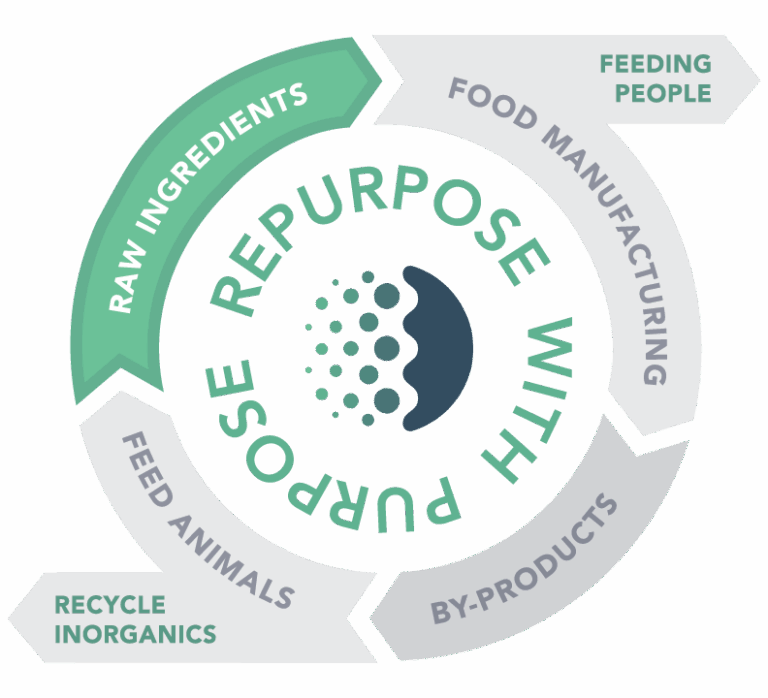
GFS25 Circular Food Graphic

Closing the Loop: Circular Food

Food waste to animal feed is a great example of the circular economy model, which is a system in which resources keep circulating within the supply chain. By closing the loop, organic by-products and recyclables are kept out of landfills and transformed into value-added assets. It’s the sustainable answer to the traditionally linear “take, make, dispose” approach to food production.

In a circular economy, by-products become building blocks that help consumer packaged goods companies and food manufacturers address rising landfill costs, changing regulations, and growing stakeholder demand for measurable progress on ESG goals. The circular approach to food waste management is proof that environmental responsibility and business growth go hand-in-hand.

Let’s follow that food, from raw materials, to food manufacturing to by-products to exceptional feed, back to feeding people.

GFS Circular Food highlighting raw ingredients

STEP 1: Raw Ingredients

There’s a lot that goes into the foods we eat long before we get to enjoy them. Grocery store shelves are stocked with products that started out as top secret recipes, calling for a long list of ingredients. Food manufacturers source bulk raw materials like grains, meat, vegetables, milk, sugar and oils from farms or suppliers. Most arrive at facilities in super sacks, bulk bins or burlap bags. Others are packaged in large feed sacks, wrapped in stretch film and stacked on palettes. From food stuffs to the stuff food comes in, Green Field Solutions develops innovative ways to close the loop in the making of consumer foods. 
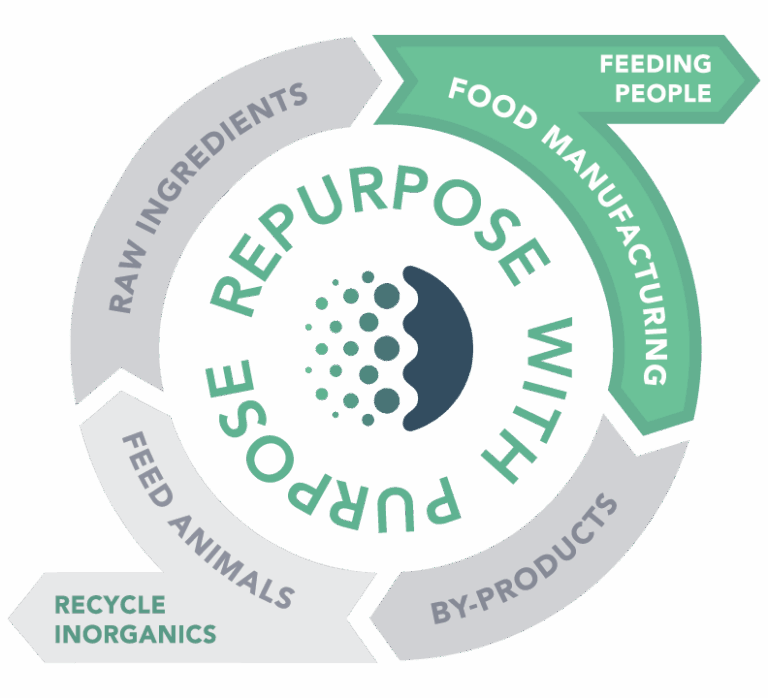
GFS's circular food infographic, highlighting food Manufacturing

STEP 2: Food Manufacturing

The operations and mechanics of food manufacturing has a lot of moving parts, from depackaging to pre-processing (clean, sort, trim, etc) to mixing and blending to final transformation (cook, freeze, ferment, pasteurize). Rotating ribbon blenders mix together raw ingredients, giant extruders shape food products, and conveyors transport materials through washers, bakers and coaters. Throughout each step in the food making process — inspection, sorting, trimming, fermenting, cooking, freezing and packaging — a miscellany of outputs are being generated.
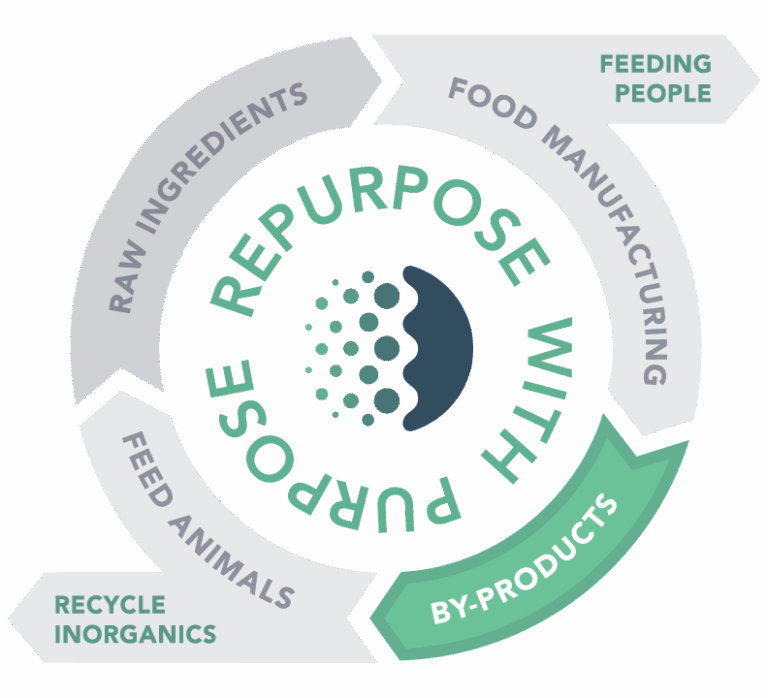
GFS circular food infographic highlighting food byproducts

STEP 3: Waste Streams

Throughout the growing, transporting and making of our favorite foods, waste streams are inevitable. It could be excess ingredients (dairy powders, grains), the packaging those ingredients come in (sacks, bins, film), production scraps (broken chips, misshapen candies), high-moisture by-products (potato peels, liquid whey, beverages), or off-spec products (lemonade mix). From initial site evaluation to ongoing facility support, Green Field Solutions transforms inevitable production waste into intentional opportunities.
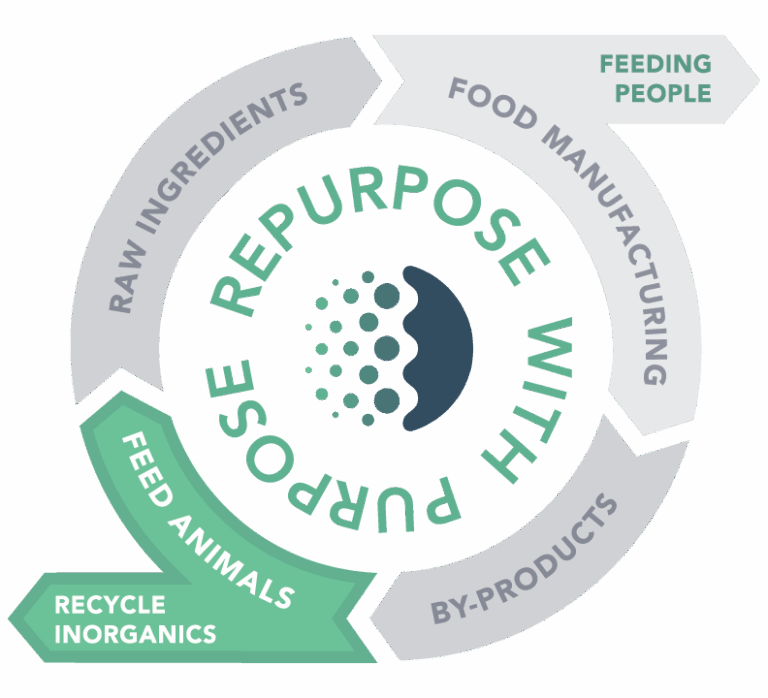
GFS circular food highlighting recycling and animal feed ingredients.

STEP 4: Close the Loop

Production by-products like whey from cheese-making, spent brewer’s yeast from beer production and potato peels from packaged side dishes can become healthy, tasty livestock feed ingredients tailored to each animal. In turn, healthy, well-nutritioned livestock provide protein sources, which return to the food supply chain as raw ingredients.  In 2024, Green Field Solutions diverted 1.4 billion pounds of residual food from landfills, which supplemented the diets of approximately 4 million pigs and cattle, 185 million piglets, and 1.6 million calves. As a result of feeding our food, GFS contributed to 600 million servings of sustainable protein for human consumption.

Circular Food: Food Waste to Animal Feed

Like the list of ingredients that make up a recipe, unlocking long-term value for by-products often brings multiple tactics into a cohesive and comprehensive strategy. Every company and facility has its own unique formula, which could include components, such as: identifying new ingredients, developing new markets, addressing aging equipment, refining operations, making a capital investment, and/or innovating new ways to address age-old challenges. 

These short case studies delve into the challenges, solutions and results of real life food makers as they capitalize on their co-products.

  • Bob Evans Farms — Diverted 12.4M pounds of consumables into feed, avoided 2,232 metric tons of CO, and cut 533,905 lbs of recyclables from landfill, positioning the company to expand similar practices across multiple facilities. 
  • National Confectioner — Converted 750,000 pounds/year of food waste into animal feed and cut landfill waste by 50%, generating hundreds of thousands of dollars in combined annual savings and revenue. 
  • Dairy Producer — Repurposed millions of pounds of near-expiry dairy into feed ingredients, turning local disposal costs into international revenue.

Real Value: Valorizing By-products

Food waste doesn’t have to be a liability. In fact, it can be a competitive advantage. Green Field Solutions proudly transforms the food manufacturing industry’s inevitable production waste into intentional opportunities that deliver value, security, compliance and operational simplicity. Have a question about circular food? Get in touch

  • Value – Reduce landfill fees and uncover new revenue opportunities.
  • Security – Ensure safe, traceable handling of branded materials. 
  • Compliance Provide data-backed reporting of progress toward sustainability goals.
  • Operational Simplicity – Choose one partner to manage food by-products, recyclables, and solid waste.

Have a question about circular food? Get in touch

Share